A guide to composite vs uPVC doors

If you’re comparing composite vs uPVC doors for an upcoming project, understanding the differences in construction, performance and application can help you make the right specification decision.
Whether you’re fabricating doorsets in-house, sourcing products from composite door slab suppliers, or working with trusted uPVC door panel suppliers, both product types offer distinct benefits and continue to play an important role in today’s residential market.
This guide explores the key differences between composite and uPVC doors, including construction, thermal performance, security, lead times and the products available from Vista Panels.
Composite vs uPVC doors: understanding the construction differences
The biggest difference between composite and uPVC doors lies in how they’re manufactured.
Composite door construction
Composite doors combine multiple materials to create a high-performance entrance door.
Most composite doors feature a durable GRP (Glass Reinforced Plastic) outer skin combined with an insulated core and internal subframe. This multi-material construction creates a door that is rigid, robust and resistant to warping, cracking and weathering.
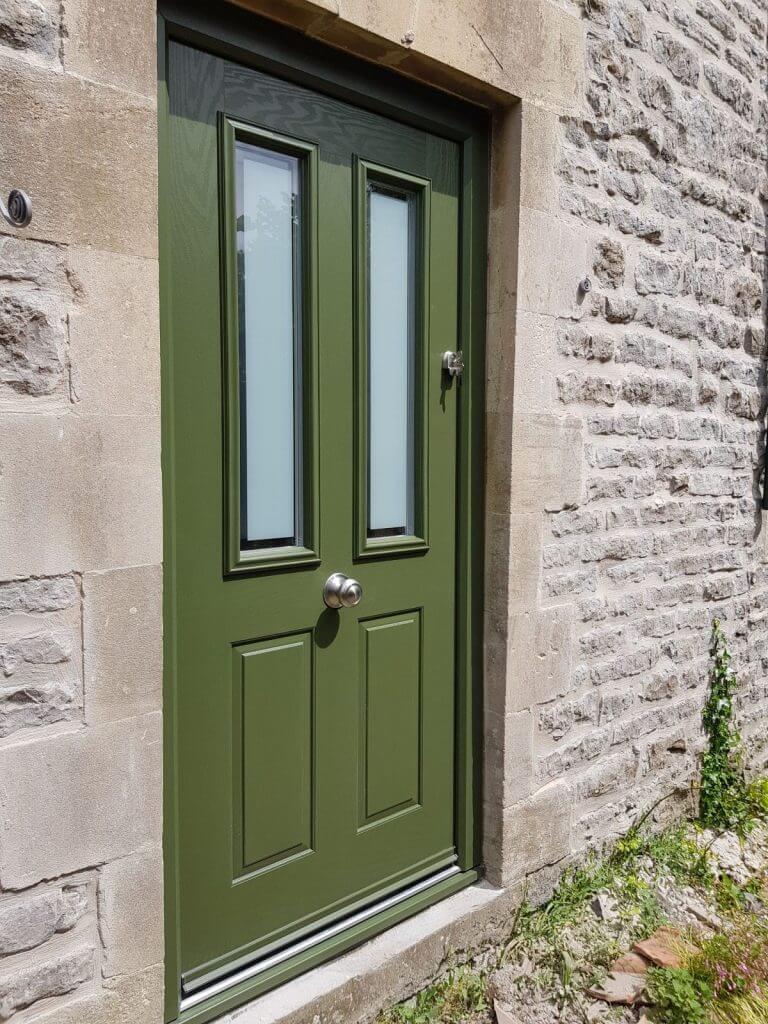
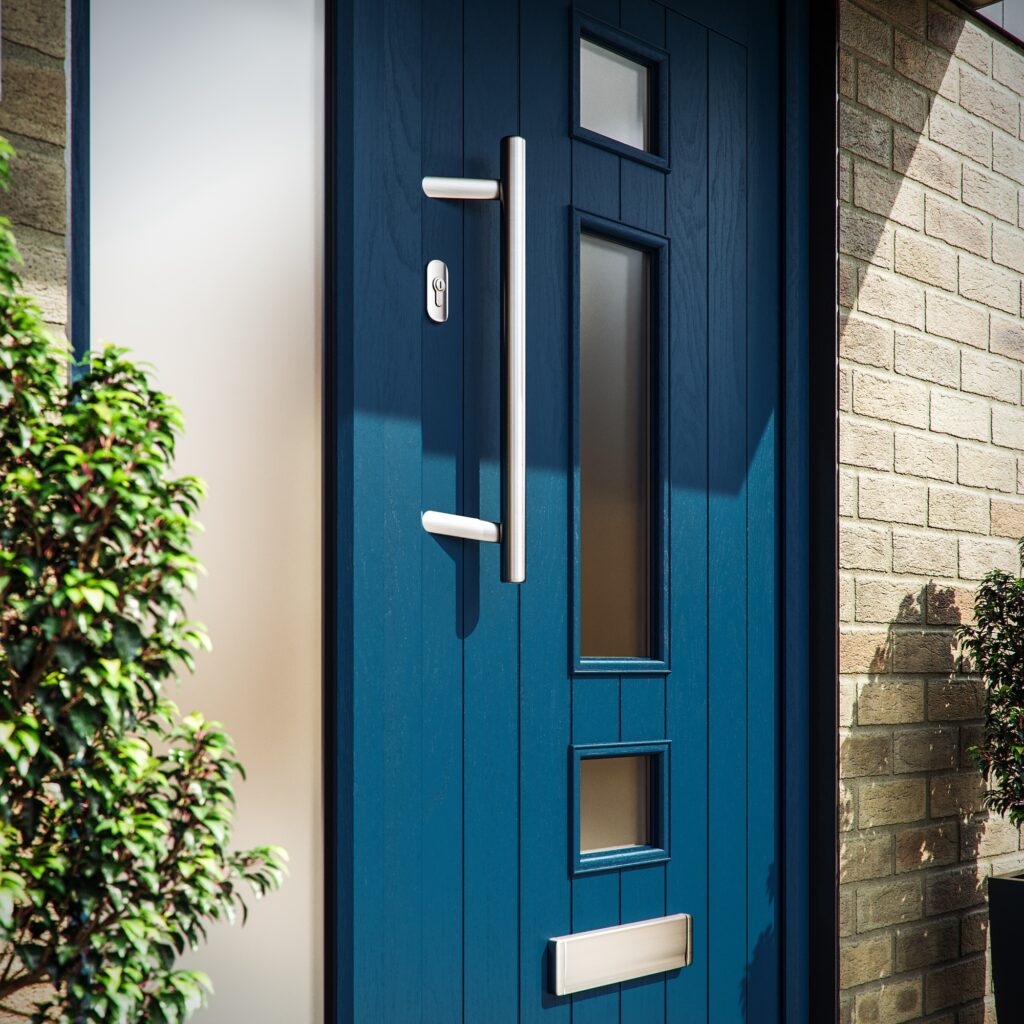
The GRP skin can also be moulded to replicate traditional timber grain textures, making composite doors particularly popular where appearance is a key consideration.
Because composite doors combine multiple materials and manufacturing processes, they are generally positioned as a premium entrance door option.
uPVC door panel construction
uPVC door panels are manufactured using unplasticised polyvinyl chloride (uPVC), a durable and low-maintenance material that has been used successfully throughout the glazing industry for decades.
Most modern uPVC door panels feature a double-skinned construction with an insulated core. This creates a strong, weather-resistant panel that can be incorporated into a complete doorset using a wide variety of frame, glazing and hardware options.
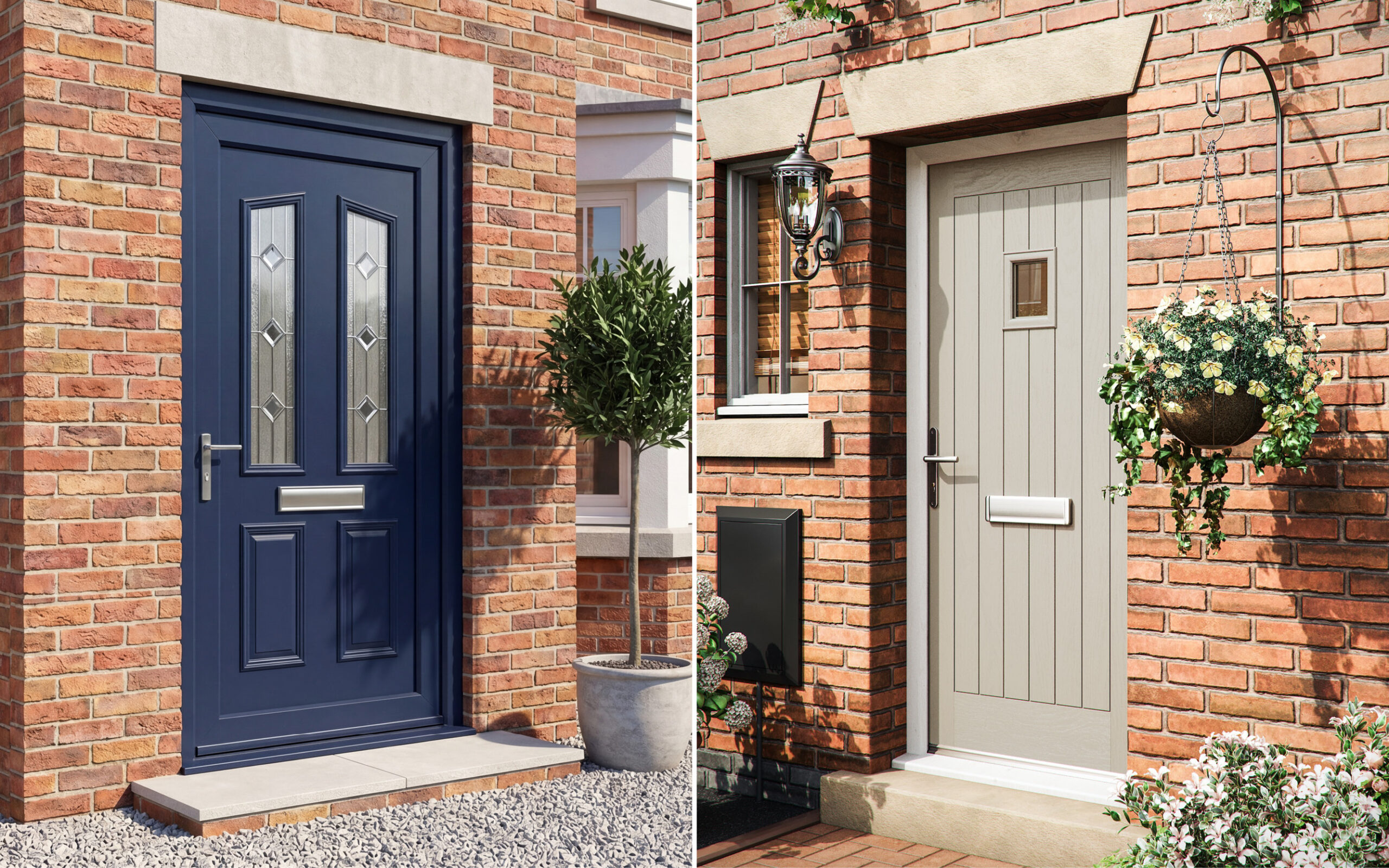
Advances in manufacturing techniques have significantly improved the appearance and performance of uPVC door panels in recent years. Decorative glazing, woodgrain finishes and contemporary styling options mean today’s products offer far greater design flexibility than many customers expect.
The simpler manufacturing process also makes uPVC a cost-effective and efficient solution for a wide range of residential applications.
Understanding thermal performance
Energy efficiency continues to be one of the most important considerations when selecting an entrance door.
Fortunately, both composite and uPVC doors can deliver excellent thermal performance when correctly specified as part of a complete doorset system.
Composite door thermal performance
Composite doors typically achieve strong thermal performance thanks to their insulated core construction. The combination of insulating materials helps minimise heat transfer and contributes to lower U-values.
The dense core construction can also provide acoustic benefits, helping to reduce external noise and creating the substantial feel many homeowners associate with a premium entrance door.
uPVC door thermal performance
Modern uPVC door panels also perform extremely well from a thermal perspective.
Insulated cores, advanced glazing options and improvements in doorset design mean today’s uPVC doors are capable of achieving excellent levels of energy efficiency.
As with any entrance door, the overall performance depends on the complete specification, including the panel, frame, glazing and hardware.
Rather than focusing solely on the material, it’s important to consider how the complete doorset has been designed, tested and certified.
Security you can specify with confidence
Security is often one of the first concerns raised by homeowners replacing their front door.
Both composite and uPVC doors can achieve high levels of security when manufactured and installed correctly.
PAS 24 and Secured by Design
When comparing products, it is worth looking beyond marketing claims and focusing on recognised industry certifications.
PAS 24 is one of the most widely recognised standards for enhanced security performance, testing complete doorsets against a range of attack methods.
Secured by Design is a police-backed initiative that recognises products capable of meeting enhanced security requirements. Both composite and uPVC doors can achieve these standards when specified correctly.
Why the complete doorset is important
One of the biggest misconceptions surrounding composite vs uPVC doors is that one material is automatically more secure than the other.
In reality, security is influenced by a combination of factors, including:
- Locking systems
- Hardware quality
- Reinforcement
- Glazing specification
- Installation quality
The complete doorset matters far more than the material alone.
Built for everyday life
Entrance doors need to withstand years of exposure to changing weather conditions while continuing to look their best.
Both composite and uPVC doors are designed with low maintenance in mind.
Composite doors benefit from highly durable GRP skins that resist fading, cracking and warping. Their robust construction makes them particularly well suited to exposed locations and high-use entrances.
uPVC doors are equally well known for their low-maintenance properties. They require very little upkeep beyond routine cleaning and offer excellent resistance to moisture, rot and corrosion.
What affects lead times?
Lead times are an important consideration for installers, fabricators and developers alike.
Several factors can influence how quickly a door can be manufactured and supplied, including:
- Colour selection
- Decorative glazing requirements
- Hardware specification
- Bespoke sizing
- Seasonal demand
Composite doors typically involve a more complex manufacturing process due to their multi-material construction, while uPVC door panels often benefit from a more streamlined production process.
Working with reliable composite door slab suppliers and experienced uPVC door panel suppliers can help ensure projects remain on schedule and customers receive products when expected.
Finding the right fit for your project
There is no universal winner when comparing composite vs uPVC doors. Both products have clear strengths, and both continue to play an important role across the residential market.
Composite doors are often chosen where premium style, enhanced thermal performance and a solid feel are key priorities.
uPVC doors remain a popular choice where value, flexibility and efficient production are important considerations.
The best solution will always depend on the individual project, customer expectations and overall specification requirements.
Built for the trade
As one of the UK’s leading composite door slab suppliers and uPVC door panel suppliers, Vista Panels provides fabricators with access to a comprehensive range of entrance door solutions.
XtremeDoor composite doors
The XtremeDoor range has been developed to deliver exceptional performance across security, thermal efficiency and durability.
Key features include:
- 4mm impact-resistant GRP skin
- High-density CFC-free polyurethane foam core
- U-values as low as 0.8 W/m²K
- PAS 24:2016 accreditation
- Secured by Design approval
- Triple-sealed outer frame
- 5-point locking system
- Standard lead times from five working days
Available in Contemporary, Traditional and County collections, XtremeDoor gives fabricators access to a wide range of styles, colours and glazing options.
Vista uPVC door panels
Vista’s uPVC door panel range combines performance, flexibility and manufacturing consistency.
Key features include:
- Double-skinned construction
- High-density E.H.D.F.R.A. polystyrene core
- A+ energy rating
- Traditional and contemporary styles
- Decorative glazing options
- Woodgrain and dual-colour finishes
- Multi-point locking compatibility
The range is designed to support everything from individual replacement projects through to large-scale residential developments.